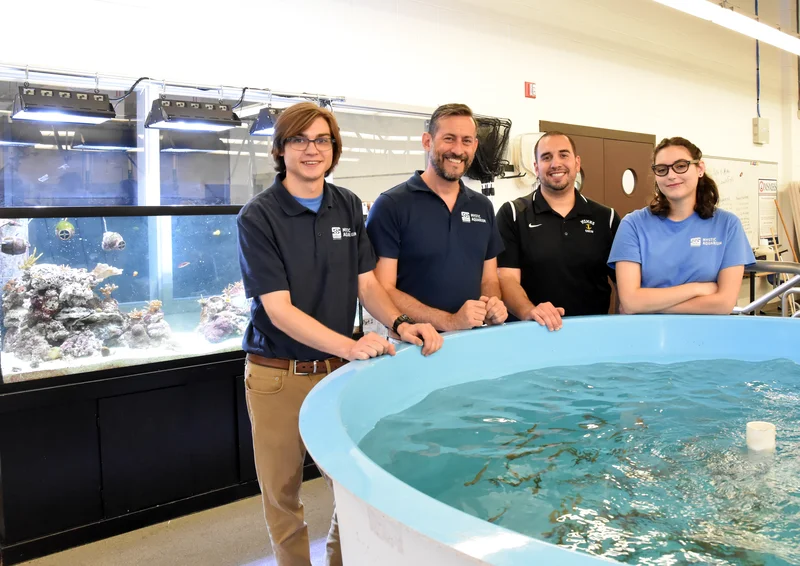
Aquaculture is the cultivation of aquatic organisms like fish, shellfish, and seaweed in controlled environments, such as ocean farms, freshwater tanks, or coastal waters. Often referred to as “blue farming,” it’s a sustainable way to produce seafood and other aquatic products while easing the strain on wild fish populations. Aquaculture can focus on food production, like farming salmon or shrimp, or growing plants such as seaweed that can be used for food, biofuel, and even cosmetics. By carefully managing water quality, feed, and habitats, aquaculture ensures healthy growth for both the organisms and the surrounding ecosystems.
Beyond providing a reliable source of seafood, aquaculture has broader environmental and economic benefits. Farmed species like oysters and mussels naturally filter water, improving marine health, while seaweed farming helps absorb carbon dioxide and reduce ocean acidification. Economically, aquaculture supports coastal communities by creating jobs and promoting sustainable industries. Whether it’s helping to feed a growing global population or contributing to ocean conservation, aquaculture is a vital piece of the puzzle for a healthier planet.